- Úvod
- KNIHKUPECTVÍ
- MINERALS OF THE CARPATHIANS
MINERALS OF THE CARPATHIANS
- Kompletní specifikace
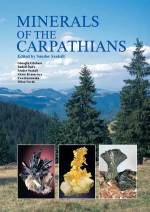 MINERALS OF THE CARPATHIANSSkladem1 770 Kč/ ks
2002, 480 STRAN - PAGES, 500 BAREVNÝCH FOTOGRAFIÍ, ČB FOTOGRAFIE A ILUSTRACE, MAPKY, PEVNÁ LAMINOVANÁ VAZBA, NOVÁ KNIHA
Více než 1000 minerálů se svými nalezišti, 50 typových lokalit, geomorfologický přehled, mineralogická muzea, literatura celé oblasti. Vychází pouze anglicky.
Mineral localities such as Cavnic, Rosia Montana (Verespatak), Herja, Baia Sprie, Pezinok, and Sacaramb should be familiar to you – there are nearly 100 others featured in this very interesting book, prepared by six authors from six countries: the Czech Republic, Hungary, Poland, Romania, Slovakia and the Ukraine. The Carpathians, a 1,500 km long mountain range, represents the “bow shaped” link between the Alps in the West and the Balkans to the South. The Carpathian Mountains exhibit a very complex geological structure, displaying metamorphic, magmatic, and sedimentary formations of Precambrian to Quaternary ages, many of them having been repeatedly involved in numerous successive tectonic and deformational events. The more interesting mineralogical regions of the Carpathians are listed by country. The areas described are not limited only to the Carpathians themselves, but include the neighboring and geologically related terrains like the Forecarpathians in Poland and the Ukraine etc. To date, about 1,000 mineral species are known occur in the Carpathians. After the introduction, a list of the mineral species first discovered in the Carpathians is given, and a brief eight-lingual vocabulary of common geographical names is included. Next, the structural and metallogenic outlook of the Carpathians is given with characteristics of the genetic types of mineral occurrences, followed by a description of the Carpathian mineralogical regions within the six countries. The main section of the book, comprising the descriptions of the minerals found in the Carpathians, is divided into chapters containing the mineral descriptions by chemical characteristics -- native elements, sulfides, halides, oxides and hydroxides, carbonates and nitrates, borates, sulfates, phosphates, vanadates etc., silicates, and organic minerals. Within these chapters the minerals are arranged alphabetically by name; within each mineral the occurrences and descriptions are given by country. The mineral descriptions are illustrated with numerous very fine color photographs. Crystal drawings are included in a separate chapter following the mineralogical part of the book. The final chapter contains information on the mineralogical museums (or those displaying the collections of minerals), in which the specimens from the Carpathians may be found in abundance. The book is supplied with extensive references, an index of the minerals and another index of localities. The quality of print is very good and the editorial work very thorough. This book is an invaluable reference for all mineral collectors and mineralogists interested in this mineralogically diverse area of Europe.